Sophie Masson – Interview

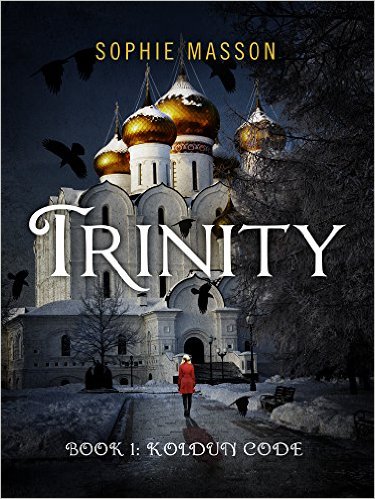
Prolific French-Australian author Sophie Masson has charmed both children and adults with her richly beautiful fantasy stories.  Her most recent book is Trinty Book 2 – The False Prince.
513CySrzp4L._SX373_BO1,204,203,200_


Tell us about your Trinity series.

The Trinity series is a duology which is set in modern Russia, against a background of hard-nosed corporate skulduggery, dark historical echoes and supernatural and magical elements that thread themselves in and out of the story. It’s a fairly unique series, I think, in that what I’m attempting to do is paint a kind of metaphorical portrait of the extraordinary nature of Russia and its culture while telling a gripping, genre-bending story with vivid characters and unexpected elements. Trinity–Book 1, The Koldun Code; and Book 2, The False Prince, are centred around the viewpoints of main characters Helen Clement, a young Londoner who by background is part French-part-American; Maxim Serebrov, an experienced, disillusioned Moscow homicide detective, and in the second book, another couple of characters who are very ambiguous but very interesting too(don’t want to say exactly who they are for fear of spoilers!).

What initially inspired you to write the Trinity books?

Russia–and a fascination I’ve had with that country and its culture since I was a child–and the two visits I’ve made there, in recent times, really increased that and also gave me the rich texture for Trinity as well as opening me up to some unexpected discoveries–such as the fact that magic and the supernatural are very present not only in traditional pre-Revolutionary culture, but very much today as well. You can read more about that aspect of it here: http://firebirdfeathers.com/2014/10/31/trinity-inspirations-old-magic-and-new-psychics/

What are you working on now?

I;m working on a novel called The Ghost Squad, a speculative fiction YA novel. It’s part of my PHD work–I’m currently enrolled as a PHD student in Creative Practice at the University of New England, and part of the project is writing that novel, plus an associated exegesis which is looking at YA speculative fiction with the theme of the afterlife! It’s really fantastic and I’m much enjoying both the reading and the writing. As well, I have several picture-book texts I’m working on(two have already been accepted) as well as a book of light fantasy short stories for younger readers.

You’re also very involved in Eagle Books translation of Jules Verne’s Mikhail Strogoff which is due out in April 2016.  How did that happen? Will Eagle bring out more Jules Verne translations? 

Mikhail-Strogoff-Cover-Front-Medium-800x1133

I’m one of the co-directors and founding partners of Eagle Books, which is a new imprint of small publisher Christmas Press, which we founded in 2013. Eagle Books will specialise in wonderful adventure novels for readers 11 and up, that can also be pleasurably read by adults. Our launch title is the wonderful limited edition of Jules Verne’s Mikhail Strogoff, in a fantastic new translation by Stephanie Smee, and illustrated by David Allan. That book is very important to me–in its original French(titled Michel Strogoff), I read it at age 11, and it was the book that made me fall in love with Russia and that has really marked me both as a writer and reader. But the English translations of it(from 19th century) were stodgy and dated and did not fairly represent the original book. Stephanie is a friend–I had first met her when she translated some fantastic classic French children’s fiction by the Countess de Segur, bestselling translations published by Simon and Schuster–and it was just so wonderful that she agreed that Eagle Books should publish her wonderful translation of my favourite childhood book! It really is a dream come true. I edited the book as well as writing the foreword–a real privilege to be helping to bring back to English speaking readers a book that in France is considered to be Verne’s masterpiece and very influential there.

We might bring out more Verne translations–we’ll see! There are many that he wrote that are not well known in English speaking countries–but Mikhail Strogoff, which some critics have called the ‘best adventure novel ever written’, is clearly the most exciting!

Many of your books are have background in folk and fairy tale.  What do you like about using fairy tales as a source material?

Fairy tales are wonderful because they are both so deep and so wide–so capacious of meaning but also light on detail so that you really have a wonderful framework to work on from the start. They have a great richness  about them and yet a great simolicity which I find very appealing.

You write for both adults and children.  Which group do your prefer writing for?

I like writing for both–depends on the story! That said, I feel freer in a sense when I write for children and young adults–there are not so many categories and restrictions in terms of genre–nobody minds if you blend them, whereas in adult fiction, it seems sometimes that people don’t like it if you do that!

What’s your writing process for books? Do you throw a lot away?  Do you write every day?  Are you a planner or do you fly by the seat of the pants?

I write at least a chapter or two a day–go over the previous day’s work before I start the next–so that the book is built up in such a way that I’ve already revised by the time I get to the end of the first draft. I do write most days, and I always write more than I need and am happy to cut, then. I’m not a planner as such but I do know where I want my story to end up, and I do know the first few chapters pretty well before I start. And because of the way I work, I do a kind of reverse planning process which means that things slot in very nicely as I’m going.

How do you go with social media?  What do you do to increase interest in your work and how much time do you spend on it? Any tips?

My main social media activity is with my blog, www.firebirdfeathers.com where I don’t just post about my own work but in fact mostly do lots of interviews and feature guest posts. It’s got quite a few readers, which is great! I also use Facebook a lot and Twitter is linked to that and that seems to work well. Tips? Well, I think, with a blog, it’s a good idea to have a variety of things you post about, don’t make it wholly focussed on your own work(for your own sake as well as readers!) And with FB/Twitter etc, my experience suggests it’s best to link FB to Twitter rather than the other way around.

What 3 artworks (books, music, visual arts, films) have most inspired you?

Jules Verne’s Mikhail Strogoff; the Tintin books–as works of art as well as stories–I adore Herge’s work and other French ‘bandes dessinees’ which I was brought up on, that ligne claire style especially; and The Godfather (film) as well as Shakespeare in Love. If I can squeeze in another artwork, I love an unusual little Renaissance portrait of a little boy(attached), son of the artist Francesco Caroto(1480–1555) –the little boy is showing off his own stick-figure artwork in a most endearing and delighted way. Really makes the centuries fall away…caroto painting

In terms of music, I am very eclectic and like all kinds of genres, from folk to jazz to rock to medieval and baroque; but I guess, sticking to the Russian theme, that The Song of the Volga Boatmen(as sung by the Red Army Choir!) has resonated for me down the years since I first heard it as a kid–my dad being very fond of the music of the Red Army Choir. When I heard it sung in Russia itself, in a lovely little room in a small kremlin(citadel) by the side of the Volga in the ancient town of Uglich(where much of the first Trinity book is set) I just burst into tears, it was so magnificent and so resonant with my own past as well as that of the place I was in…
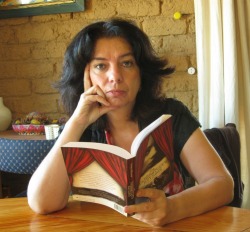


Sophie Masson

My publishers

12899801_10154104041198336_540873300_n

The wonderful Russell B. Farr and Liz Grzyb aka Ticonderoga Publications showing off The Dion Chronicles by  yours truly at Swancon

http://ticonderogapublications.com/web/index.php

http://www.indiebooksonline.com/catalog/product_info.php/products_id/125

Many thanks for the photo Michael O’Brien


Narrelle M. Harris – Interview


ColonialBoyFrontCover sml

Prolific fantasy and erotica writer Narrelle Harris is my interviewee today.

Her new book from Improbable Press The Adventure of the Colonial Boy  (A Holmes/Watson romance set in Australia in 1893. Murder! Dangerous sea voyages! Deductions! Snakes! Honour, angst, and chases! Unrequited love, requited!)

is due to be launched next Wednesday (March 30) 6.30 for 7.00 at the Penny Blue Bar Drivers Lane (off Little Bourke Street, near Elizabeth St) Melbourne VIC 3000


Tell us about The Adventure of the Colonial Boy. What inspired you to write the actual adventure element of the story?

When I’m writing romance, I’ve always got an action/adventure element of the plot around which the characters are interacting – I love for my people-in-love to be having adventures together. This being a take on a Sherlock Holmes story, I’ve always loved the mysteries as much as the friendship, so it was natural from the start that there should be a mystery/adventure part of the story.

I wanted to set it in Australia for a couple of reasons – easier for me to research, for a start – but primarily it was because I thought that if they’d been repressing their feelings for each other for a decade in the framework of London, then something had to change dramatically to allow those feelings to surface. There had to be emotional triggers, but also for them to be in an environment which was new to them, to shake things up.

As for the plot itself – Conan Doyle’s stories suggest that John Watson lived for a time in Australia (he refers in The Sign of Four when he sees the Sholto’s yard dug up in search of treasure, that he’d seen diggings like it in Ballarat).  So I worked out a history for Watson that informs the choices he’s made and the person he’s become. The title refers potentially to a couple of characters, actually, but primarily, the Colonial Boy is John Watson.
I knew I wanted to include elements of non-white history in Australia, hence the Chinese connection. I also looked to Arthur Conan Doyle’s stories (which I’d read in full before writing The Adventure of the Colonial Boy) for some of those mysteries that were only ever hinted at. The red leech and the horrific death of Crosby the Banker were mentioned in the same sentence and sparked some ideas, so they became the prompts to inform the plot.

Then it was a matter of folding in themes of identity and repression, a splash of Moriarty’s old gang and the idea that John Watson is an unreliable narrator. Conan Doyle notoriously had no damns to give about continuity, and I worked that in as a deliberate choice on Watson’s part.

I wonder if writing same sex male erotica is about women secretly wanting to be as sexually free as men but not being able to express it with a female character. What do you think?

It’s certainly one possible element, but not the only one. There are ideas about sexual freedom there; ideas about two characters having equal agency that sometimes we feel can’t be quite achieved between a hetero couple, though that depends a lot on the writer and on the couple! I think there are ideas in it about women liking to see men in touch with their emotions together. I think there’s just an enjoyment of two hot men being in love and sexual together. I mean – it’s just sexy! ImprobablePressfull

There’s certainly a long history of queer readings of Holmes and Watson. That has really come to the fore since the BBC Sherlock series, which plays with that idea so much, though they’re not the first to tease with queer subtext.

Basically, though, I think it’s valid to read the relationship as Epic Best Friends OR as Epic Lovers. Their friendship and relationship has fascinated people for over 120 years, and this is just another iteration of that – that people like to read about an epic love story of different-but-equal characters, and their gender doesn’t really matter in that respect. We just love to see two people in love. And having adventures together.  Well, I do. And of course queer history means that people had to look for hidden representations of queerness, since those relationships were generally not openly represented (and not necessarily positively) until the last few decades.

(Seriously, people who say ‘Watson wasn’t gay – he got married!’ are deliberately ignoring the realities of hundreds of years of queer history.)

What else are you working on at the moment?

I submitted an urban fantasy to one publisher, I hae a queer paranormal romance submitted with another, I’m working on a couple of short stories submissions (one for a queer romance collection, the other for a Sherlock Holmes anthology with the Best-Friends interpretation) and I’ve started work on co-writing a new book for Improbable Press!

What’s your writing process for books? Do you throw a lot away? Do you write every day? Are you a planner or do you fly by the seat of the pants?

I used to just write by the seat of my pants – get an idea and start writing to see what happened. It worked for a while, but then it stopped working and it threw me for a six. Now I tend to get an idea, sketch it out, fill in the sketch a bit and then start. I’m not a rigid planner – plenty changes or gets dropped as I go – but I have a basic framework and then fill in the gaps. I think I once equated it to throwing up a frame for a house, but then how the house is fashioned and decorated, and whether you build on an extra room, is fluid and responsive to the ideas going on at the time.

I’d love to write every day, but I have to earn a living too (fiction doesn’t pay that well!) and I want to spend time with my family and friends. But I expect that even on days I’m not sitting down to write in a solid chunk, I’m emailing ideas for dialogue and prose to myself. My brain never stops writing, even when I’m not at the computer. I get antsy if it’s been too many days, actually. I was discussing this with fellow writers on Twitter recently – that itchy feeling in your skin of words building up that can’t get out.

How do you go with social media?

It can be a challenge to find the time. You can’t just plaster links and say Buy My Book. I mean, you do send out those links as well, in due course, but the main thing is to build communities and connections, to participate and engage with people.

It’s great, because you find work and people and ideas you love, and hopefully they’ll also love you and your work and ideas, but you can’t enter into it thinking it’s just an advertising wall. It’s more like a party where you get to mingle, make friends, and you all talk about the cool stuff that’s going on – not necessarily your own, in fact.

I spend a lot of my social media time ALL CAP SHOUTING about other people’s work that I love. So while we’re here, please everyone, read Thrive by Mary Borsellino. Read The Night They Met by Atlin Merrick. Read The Creature Court trilogy by Tansy Rayner Roberts. 😀

 What do you do to increase interest in your work and how much time do you spend on it? Any tips?

I write about things that interest me that pop up in my work, and then the hope is that people who also like those things will follow me to see what else I’m doing. I blog about things that spark my imagination or intellect, and I review things as well. I’m always happy to talk to people about things.

With Colonial Boy, I’ve actually been active in Sherlock fandom for a number of years now, which has included writing fanfiction for fun, to deal with writers blocks and to experiment with ideas and styles. A lot of my lovely readers in that sphere have supported me because they like my work already, and have gone and bought the ebook which is already available, and a number have pre-ordered the paperback. They’ve been just wonderful. That’s an environment where people habitualy give encouragement and engage with you by reading the comments. I’ve met some lovely people through those sites, and made some wonderful friends.

But as I said, it can’t just be talking about yourself or your own work all the time. You have to engage with others, share ideas and resources, engage with others about the things they do that interest and excite you. It’s a community and a network of ideas and enthusiasms, not just a Shopping Channel.

What 3 artworks (books, music, visual arts, films) have most inspired you?

I pick up inspiration from so many places – including people I meet, landscapes and cities, that it’s hard to narrow it down.

I listen to music a lot when I write, and the type of music Iisten to changes with the type of book. I do listen to Fall Out Boy a lot. I love their combination of happy melodies and angry lyrics, and musically they change and grow with each album, and I love that capacity in them.

An artist I found inspirational was Lin Onus, an indigenous artist who did work that was likewise angry/funny. His X and Ray series is fantastic. He did beautiful work, and funny work, and work full of rage, as well as whimsy. He died much too young and is a huge loss.

Of course there are a lot of books I find inspirational. The original Sherlock Holmes stories and the great Holmes-Watson friendship, which can be interpreted as a great love story is an obvious case in point. I’ve also been very inspired and influenced by Lois McMaster Bujold’s Vorkosigan series, and the humanist philosophy behind it.945576_10151655974443035_1062582870_n


Find Narrelle at the following sites:

Or you can email.

The Adventure of the Colonial Boy

Paperback Available for Pre-order now!

Ebook released on 29 February!

Already got your copy? A review of one or two sentences onAmazon and/or Goodreads can really help!


Touched by celebrity

hqdefault

Station Story
I always chat with any Scandinavians who come through the station after visiting the zoo. I have such happy memories of my 7 years living in Copenhagen. They are lovely countries and Social Democracies are my government of choice. Got talking to a couple of young Swedes the other day and they told me they were from Malmo – Home of Scandie Noir.
“Does it annoy you to have all those crime thrillers set in your city?” I asked.
“No in fact, my father’s apartment was used for a setting in The Bridge!”  said one.
Turns out it was the home of the first victim in the latest (3rd) series.
OMG! I have been touched by celebrity! 🙂

M and C – the story continues

I’ve written before about my homeless friends M and C, How they got themselves into a house and how then they broke up and C went off somewhere. I saw M a lot going past in the train after that and then for a while I didn’t.
Suddenly he started getting on at my station. He told me he’d found C – she was at her mother’s in the country – but that he’d lost the house. He told me he’d been in jail for a few months. “I punched a guy who was fiddling with little kids,” he told me. “But I was good in jail and worked on a trade certificate. I’m a qualified plasterer.”
He’s quite a nice person -he always helps tourists with the ticket machines and timetables very kindly – but it’s also clear he’s got a short fuse and he does love his Wild Turkey and coke. He has a big scar across his head which implies maybe Acquired Brain Injury or is simply due to his epilepsy. For a couple of days he had work on a building site. Then he was back to begging. So one step forward two back.
Then a few days later I saw a familiar figure on the opposite platform. It was C. She waved at me. She looked good.
The next day M waved at me out of the train. “Great news. She’s back,” he shouted.
They stopped by the station a couple of days later. They seemed pretty happy. Though C seems a bit reserved. They had a wizened little old man in tow. C introduced him as her father. “He’s staying with us for a bit,” she said. Staying was a strange word to use. They were all off into the city to do some begging. If they didn’t make enough money for a room, well they had sleeping bags.
M and C make me aware of my own middle-classness – my assumptions about work, houses and stability. You can’t have a relative to stay with you unless you at least have a floor for them to sleep on, can you? They also make me realize you don’t have to travel to experience other ways of life. They are here in Melbourne, right under your nose.

Jason Franks, Writer and Comic Book Author


Sixsmiths2_cover_880Melbourne writer Jason Franks likes to walk on the dark side . His first novel Bloody Waters, about Clarice Marnier, a young guitar virtuoso who sells her soul to the devil, was short listed for the 2012 Aurealis award.  His McBlack comic series stars a private detective gone bad. But today we’ll be focusing on the Sixsmiths as Franks is about to launch his second comic in the series.  

Tell us about The Sixsmiths

The Sixsmiths are a family of suburban Satanists fallen prey to the global financial crisis. Sort of.

Well, they’re not like modern, Anton Laveyan Satanists (who are often really atheists and/or religious freedom japesters). In this world Satanism is a longstanding religion with a history that’s entwined with the other monotheistic faiths (Judaism, Christianity, Islam) with a long history of persecution. The conceit is that they’re just ordinary folks, and their religion could stand in for any one of those religions at different times. Satanism gives us the ability to invert everything and that is a great source of jokes.

The Sixsmiths do practice magic as part of their religion, but there’s no supernatural aspect to the book–it’s a straight-up religious satire.

One thing we really wanted to avoid was becoming a ripoff of the Addams Family, which is to my mind a wholly perfect creation. So instead we decided to rip off the Simpsons and South Park.

What initially inspired you to write about them?
Marc asked me to write a graphic novel for him to draw with the intention of selling it to Slave Labor Graphics, who had published Marc’s two prior books. He came down to Melbourne for a book launch and afterwards we sat down in a cafe to brainstorm over coffee. One of the sketches he did in that session was a depressed-looking teenage boy wearing a pentagram t-shirt–that’s where the original idea came from. That became Cain. Next was the vicar, Melmoth. Ralf was based on a punter sitting at the other end of the cafe and for Lilith, I said “black hair with a white streak.” Annie was more difficult and Marc came up with her on his own. Once we had characters and the setup (“suburban Satanists”) we were most of the way there, we just needed a plot. The subprime crisis in the USA was just rumbling then so I said ‘money problems’. Neither of us guessed that we’d be in GFC by the time the book was ready.

The Sixsmith’s church picnic reminded me of church picnics I went to as a child.  Made me wonder if you’d gone to picnics with religious organizations too.

cover_vol01 sixsmithThere are two picnics, sort of, so I’ll tell you about both of them. The blessing after the mass in Unhallowed is inspired by the Jewish custom of having a ‘kiddush’ (blessing) after the Saturday morning service. It’s often sponsored by a family, especially if their son has had his Bar Mitzvah during the service on that particular day. These usually take place indoors but I put it outside because a) I wanted a Churchier feel, and b) because that made it easier for Dennis to gatecrash.

The other picnic–the Festival of Mammon–is based on the annual Chanukah in the Park. I provided Marc with photos of the St Kilda Festival for reference, though, which is why it doesn’t look like Caufield park. We made up the ceremony for maximum silliness.

What else are you working on at the moment?

A bunch of stuff. One of them is a comic called Gourmand Go, which is basically Cannibal Star Trek. I’m finishing off a novel called XDA Zai, which is about an assassin who takes missions in impossible places (fairy land, Atlantis, a dirigible city, etc etc)–but who’s really in it for the travel opportunities. Also a new urban fantasy novel, a sequel, and some other continuing work. My new novel, Shadowmancy, is all done and should be available real soon now.

How do you start out with your stories? In the middle, beginning or end?
Depends. Usually I know the end before I start, and then I figure out the start and just strike out towards it. But sometimes I write everything out of order and then stitch it back together. Sometimes I find there’s more when I get to the end I planned. Sometimes I get to the end and then figure out exactly what happened, which can be a bit of a weird feeling.

What’s your writing process for comics and for books?
I’m usually a bit more structured in the way that I write comics, because you’re so limited by the format and the available pagecount. Usually I’ll have a good outline of what happens where and I’ll do page-by-page breakdowns before I start writing scripts. There’s a lot more planning with comics.

With prose I prefer to freewheel it more. I usually have a structure in my head but I like to leave myself room to discover more about the characters and the world. That’s the big difference, I guess: there’s a lot more room in prose.

Do you throw a lot away?
Not as much as I used to, but yeah, I do, especially in prose. I usually write more than is necessary in the first draft and then come back through and move stuff around, cut everything back. Usually this amounts to 10% of the wordcount on each draft. Satanist or no, being boring is the biggest sin for a writer.

Do you write every day?
I would if I could, but alas not. I do try to do some writing-related activity every day, but often this is non-creative stuff like updating websites or chasing up editors or artists.

Are you a planner or do you fly by the seat of the pants?
I guess I’m a pantser by nature, but I usually have an informal plan in my head, even if I don’t have one on paper. Every project is different, though.

How do you go with social media? What do you do to increase interest in your work and how much time do you spend on it? Any tips?
I’m pretty rubbish at it. I spend probably too much time on facebook and not enough time on twitter–hard to quantify how much time I spend because I check it throughout the day when I get some idle time. I don’t sit down and say “now I’m going to do social media,” which perhaps I should, so that I can meter my time… but I also think it’s a mistake to look at it as a marketing exercise to the exclusion of all else. Nobody wants to engage with you if you spend all day begging you to look at their work. Be a person who talks to other people and occasionally talks about their own work.

What 3 artworks (books, music, visual arts, films) have most inspired you?
Only three? Twenty wouldn’t be enough!

Ok, today my three are:
Roger Zelazny’s Amber cycle. I’ve just reread it for… well, I don’t know how many times I’ve read it, and it’s still fresh and smart. It’s so much a part of my DNA as a writer that I don’t even realize it any more.
Tom Waits’ album Bone Machine is something I keep coming back to. Aside from the brilliant songwriting I just love the sounds of it. It’s like a Disney villain gets drunk on the way to the circus and goes stumbling around a foundry. As dark as the album is, it’s also comical and hugely entertaining.
Being John Malkovich is one of my favourite movies. Charlie Kaufman and Spike Jonze take a surreal premise and build something that’s completely logical and meaningful out of it. Also, it’s goddamn hilarious.

jf_cThe launch of Sixsmiths Volume 2 will be on March 19 at 6.00 at Eydie’s: 86 Lygon St, Brunswick East VIC 3056

 www.jasonfranks.com

Email: jf@jasonfranks.com

Twitter: @jasefranks


Too much information

My regular customer J, told me early on he was autistic. If so, he’s pretty high functioning as he holds down a good blue collar job. He feels this entitles/requires him to call all women “shelias” and to say “good day mate” at every opportunity. Evidence of an ironic sense of humor? (Not a common autistic trait, I would have thought.) He’s a nice young man apart for that and we often talk. His main autistic trait seems to be that he has no filters. Sometimes I catch the other customers sniggering at things he says. Fortunately there was no one else in the waiting room recently when he startled me by replying to an ordinary “how are you?” with the information that he’d caught a venereal disease. (And no I didn’t ask for details – he probably would have told me and I really didn’t want to hear.)Still he has informed his partner/s very assiduously so it is no business of the station staff to judge.

Not what you think

Even though school holidays are over, the Zoo is still teaming with international visitors, lots of whom must walk from the city since they keep turning up at the station without myki cards. Lots of people from mainland China at the moment – (Chinese New Year) – which is lovely to see, but trying to deal with the fact that our ticket machines don’t give change or deal with foreign credit cards and that even single trip users have to buy a myki smart card, can be very complicated when there is little or no shared language. Luckily I’ve been able to enlist the help of mandarin speakers on the platform. Once they know the score, people often go off and call a cab.
With North Americans I don’t have communication problems, but my heart sinks when I discover they have no change. North American credit cards don’t have pin numbers and our machine takes nothing else.
Last week one tall and very handsome American, gave up and went outside to call UBER.
He was joined by two sleazy looking characters (you know the sort, skinny blokes with tatts and bad teeth) with a large Rhodesian Ridge back dog. The guys started admiring his Blue tooth headset in a way that made me a bit nervous so I went out and hovered around protectively. But instead of mugging the man, when they found out he didn’t have a ticket, they offered to give him one of their spare myki cards. (Most Melbournians have several by now) Then we all stood around and patted the very good-natured dog until the train came.

Wheelchairs

One of my wheelchair travelers is a young man of middle-eastern origin and poor English.  I don’t know if he didn’t understand that the driver would get a ramp out for him or if, as seems more likely, he is building up his strength to get in to the train without help. Some very fit individuals do. But he’s not there yet and last week he didn’t hoik the chair up high enough and it got caught on the lip of the train.  Over went the chair, tipping him face first onto the train floor.

He didn’t fuss, though the rest of us were flapping about in a tizz – train driver, station staff, fellow passengers. But the young man simply crawled around on his hands until he was in a good position for someone to lift him back into his chair.  He’s got the determination to get there eventually.  But I was relieved he waited for the ramp this week.

Animals and Trains in the news. And no – not the ones you think

ABC Platypus

All the station stories seem to be about animals this week – at least on the internet.

Platypus found at a station in Queensland.
http://www.abc.net.au/news/2016-02-03/playtpus-pops-up-at-queensland-rail-station/7136156

However it’s the seagull story that has gone totally viral. Here it is –

Seagulls on a train

Feedback from other railway workers range from “urban myth” to “I hope its true!” to “anythings possible on the railways.” I’ve got no witnesses yet.
But the Age has summed it all up with video footage. Apparently Seagulling is an urban sport in Melbourne. Such a rich tapestry of life. 🙂
http://www.theage.com.au/victoria/frankston-line-seagulling–is-this-the-video-footage-internet-has-been-hunting-for-20160203-gmkdxq.htmlff the tracks.